Out of Stock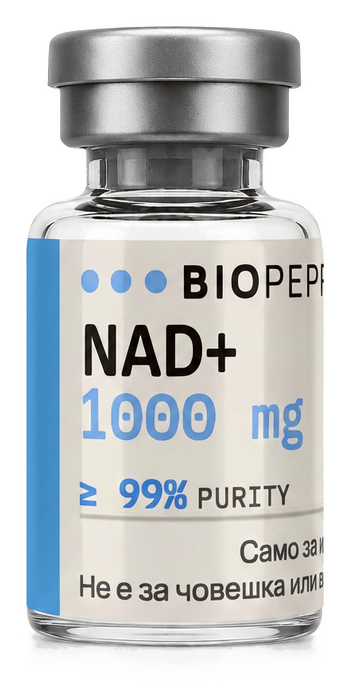
Cellular Pathway Research
NAD+
Coenzyme studied in mitochondrial and redox metabolism research.
Out of Stock≥99% (HPLC)Size: 1000 mg
Free delivery on orders over €70
Published
Important: This article is intended solely for educational and informational purposes. It does not constitute medical advice and does not encourage the injection, ingestion or any use of peptides in humans or animals. The products on this site are intended for scientific research and laboratory purposes only.
NAD+ (nicotinamide adenine dinucleotide) is a fundamental coenzyme found in every living cell. Unlike peptides such as semaglutide, tirzepatide or tesamorelin, NAD+ is not a peptide hormone — it is a small molecule involved in many essential cellular processes. NAD+ exists in two main forms — the redox pair NAD+ ↔ NADH — fundamental to producing cellular energy. It is also a substrate for several important enzyme systems, including the sirtuins and the PARP enzymes.
A core function of NAD+ is participation in redox reactions. During metabolism NAD+ accepts electrons and protons to become NADH, which then delivers those electrons to the mitochondrial electron transport chain. This supports the proton gradient used to synthesise ATP — the cell's main energy currency. Simplified: nutrients → NAD+/NADH → mitochondria → electron transport → ATP. NAD+ is directly tied to how cells extract energy from food.
NAD+ participates in glycolysis, the Krebs cycle, β-oxidation of fatty acids, oxidative phosphorylation and the maintenance of cellular energy balance. Disruption of NAD+ metabolism can therefore have wide consequences for cellular function — one reason NAD+ is actively studied in the context of ageing, metabolic health and mitochondrial function.
One of the best-known scientific hypotheses is that NAD+ levels and metabolism change with age — in some tissues and ageing models, available NAD+ declines, partly through increased activity of NAD-consuming enzymes such as CD38 and PARP. Hence the interest in strategies that restore NAD+ or its precursors. But note: the age-related decline of NAD+ is well studied, yet that does not automatically mean that raising NAD+ in humans extends life.
NAD+ is a required substrate for the sirtuins — enzymes involved in regulating cellular metabolism, mitochondrial function, gene expression, the stress response and ageing-related processes, with SIRT1 and SIRT3 drawing particular attention. Because their activity depends on NAD+ availability, changes in NAD+ metabolism can influence these pathways. This underlies NAD+'s association with the concept of cellular longevity.
NAD+ also participates in DNA repair mechanisms — especially through the PARP family (poly-ADP-ribose polymerases), which use NAD+ as a substrate for ADP-ribosylation reactions in the cellular response to DNA damage. NAD+ therefore matters not only for energy production but for genomic stability.
NAD+ metabolism connects to cellular inflammatory processes. One mechanism involves CD38, an NAD-consuming enzyme whose activity can rise with chronic inflammation and ageing — a potential loop: inflammation → more CD38 → less NAD+ → altered cellular function. The link is actively studied, but in humans it has not been proven that raising NAD+ by itself treats chronic inflammation.
NAD+ participates in the breakdown of carbohydrates, fatty acids and amino acids, and the NAD+/NADH ratio serves as a signal of the cell's redox state. In animal models, restoring NAD+ metabolism through precursors such as NR (nicotinamide riboside) or NMN (nicotinamide mononucleotide) can improve certain measures of mitochondrial and muscle function. In humans the results are considerably more mixed — claims like “NAD+ dramatically boosts endurance” are not adequately supported by clinical data.
The brain has high energy demands and depends on effective mitochondrial function, so NAD+ metabolism draws interest in research on neurodegeneration, cognitive ageing and neuronal stress. Preclinical models report changes when NAD+ metabolism is restored; no effect on neurodegenerative disease in humans has been established.
The scientific logic runs: less NAD+ with age → less sirtuin activity, impaired mitochondrial metabolism and altered DNA repair — so restoring NAD+ could theoretically support cellular function. The preclinical data is interesting, but cellular improvement does not equal proven extension of human life. Whether raising NAD+ changes ageing or disease outcomes in humans has not been shown. The accurate statement: NAD+ is an important component of the biology of ageing and an actively studied potential therapeutic target.
NAD+ can be raised directly or through precursors — most prominently nicotinamide riboside (NR), nicotinamide mononucleotide (NMN), nicotinamide and nicotinic acid, which feed different NAD+ biosynthesis pathways. Human studies show some precursors can raise NAD+ metabolites in blood and certain tissues. That does not automatically mean exogenous NAD+ and NR/NMN have the same pharmacological effect.
NAD+'s biological importance does not automatically mean established effects of raising NAD+ in humans — clinical data on the various ways of raising it is still developing. Products sold as “NAD+” can also differ substantially in purity, concentration, stability, manufacturing and pharmaceutical quality. Results obtained with one specific form must not be transferred to every product bearing the label.
NAD+ is a fundamental cellular coenzyme required for energy production, mitochondrial metabolism, redox balance, sirtuin activity, DNA repair and the cellular stress response. Its metabolism changes with age, making it one of the most interesting targets in ageing research. The preclinical results are striking but must not be over-extended to humans: the science supports NAD+ as a fundamental component of cellular function and a promising research target — not as a proven “rejuvenation therapy” or a means of extending human life. That distinction between established cell biology and still-developing clinical science is the key to understanding NAD+ correctly.