Tissue & Neuropeptide Research
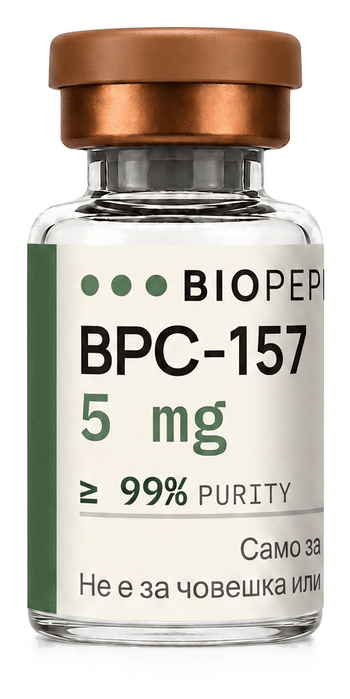
BPC-157
Synthetic pentadecapeptide studied in cell-signalling research.
≥99% (HPLC)Size: 5 mg · 10 mg
Free delivery on orders over €70
Published
Important: This article is intended solely for educational and informational purposes. It does not constitute medical advice and does not encourage the injection, ingestion or any use of peptides in humans or animals. The products on this site are intended for scientific research and laboratory purposes only.
BPC-157, also known as Body Protection Compound-157, is a synthetic pentadecapeptide of 15 amino acids. Its sequence is GEPPPGKPADDAGLV and its molecular mass roughly 1419 Da. Over recent decades BPC-157 has attracted substantial scientific interest through experimental models probing its potential effects on various tissues and physiological systems. Despite the broad interest, BPC-157 must still be treated as an investigational molecule, because human clinical data is limited. This article is informational and educational — BPC-157 must not be presented as an approved medicine or proven treatment.
BPC-157 is a 15-amino-acid synthetic peptide tied to research on cytoprotection, tissue repair, angiogenesis and inflammatory processes. The literature covers a large number of in vitro and in vivo models, including injury models of muscle, tendon, ligament, bone, the gastrointestinal tract and the nervous system. That breadth is one reason it draws interest in regenerative medicine.
Tissue repair is the most-studied territory — tendons, muscles, ligaments, bone, musculotendinous structures and the gastrointestinal tract. A 2025 systematic review focused on orthopaedic and sports medicine identified 36 publications from 1993–2024, reporting positive results across animal models, including functional, structural and biomechanical endpoints. Interesting — but to be read carefully: a result in an animal model does not automatically mean demonstrated efficacy in humans.
The research is not confined to a single mechanism. Angiogenesis — the formation of new blood vessels — matters for repairing damaged tissue, and the preclinical literature links BPC-157 to processes regulating the vascular response. ERK1/2, part of the MAPK signalling system involved in cell proliferation and repair, is named among the potential signalling pathways. Another mechanistic angle is interaction with the nitric oxide (NO) system, important in vascular tone, endothelial function and angiogenesis.
Across experimental models, BPC-157 has been associated with changes in a range of inflammatory mediators — one reason it is studied in tissue injury and inflammatory models. The distinction matters, though, between an anti-inflammatory effect in an experimental model and a proven anti-inflammatory treatment in humans — the latter cannot be concluded from preclinical data alone.
A preclinical pharmacokinetic study in rats and dogs found an elimination half-life under 30 minutes. With intramuscular administration, absolute bioavailability was roughly 14–19% in rats and 45–51% in dogs; the main elimination routes involve urine and bile. These values come from animals and must not be transferred automatically to human physiology.
A preclinical toxicity study in mice, rats, rabbits and dogs found no serious toxicity under the tested conditions, reporting no genotoxicity or embryo-foetal toxicity in the respective models. Useful preclinical information — but it does not demonstrate long-term human safety. An animal toxicology profile cannot substitute for well-controlled clinical trials.
This is the most important part of the BPC-157 story: the human data is far more limited than the preclinical literature. A 2025 systematic review identified only a handful of small human studies — in musculoskeletal pain, interstitial cystitis and intravenous administration — and stressed the absence of large, well-controlled clinical trials. In 2025 a pilot study of intravenous administration in two healthy adults was published: no adverse reactions were recorded, and cardiac, hepatic, renal and thyroid measures plus blood glucose showed no measurable unfavourable changes. But the sample is n=2 — preliminary tolerability information, not a safety profile.
BPC-157 exemplifies the gap between scientific potential and clinical proof. Establishing a molecule as a safe, effective therapy requires a standardised pharmaceutical formulation, well-characterised pharmacokinetics, toxicology, controlled clinical trials in sufficiently large populations, long-term safety data and a benefit-risk assessment. A current 2026 review concludes that BPC-157 still has no approved pharmaceutical formulation, no validated dosing regimen, and no completed Phase II clinical trial.
The most interesting aspect is not one claimed benefit but the breadth of biological processes in which the peptide has been studied: cell migration, angiogenesis, inflammatory processes, tissue remodelling, NO-system interactions, ERK1/2 signalling and musculotendinous repair. That multiplicity is one reason the molecule keeps being studied.
BPC-157 is an interesting experimental peptide with a wide preclinical literature. Animal research points to potential influence on processes tied to tissue repair, angiogenesis, cell signalling and the inflammatory response. At the same time, the available human data remains limited and does not permit firm conclusions about efficacy or long-term safety. That is exactly what makes BPC-157 interesting for future research: the preclinical signal is strong, but the translation to clinical practice is still ahead.