Tissue & Neuropeptide Research
BPC-157
Synthetic pentadecapeptide studied in cell-signalling research.
≥99% (HPLC)Size: 5 mg · 10 mg
Free delivery on orders over €70
Published
Important: This article is intended solely for educational and informational purposes. It does not constitute medical advice and does not encourage the injection, ingestion or any use of peptides in humans or animals. The products on this site are intended for scientific research and laboratory purposes only.
BPC-157 and TB-500 appear together in recovery research often enough that they are frequently treated as interchangeable. They are not. They come from different sources, act through different pathways, and behave differently in tissue.
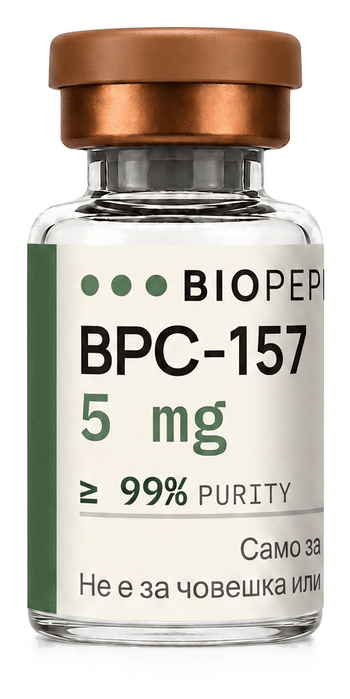
BPC-157 is a synthetic fifteen-amino-acid sequence derived from a protein found in human gastric juice — hence Body Protection Compound. It does not occur in nature as an isolated peptide; it is a fragment identified within a larger protective protein and reproduced synthetically.
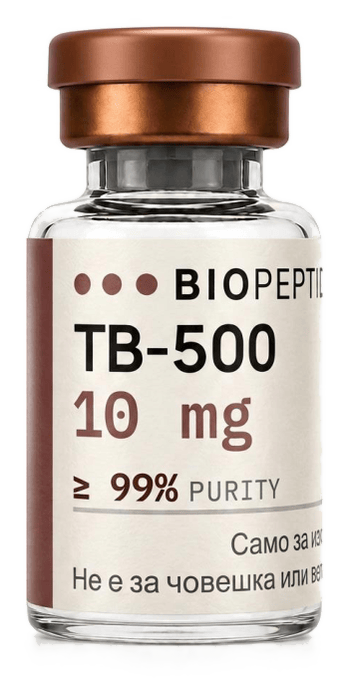
TB-500 is a synthetic fragment of thymosin beta-4, a naturally occurring protein present in most human cells and in high concentration at wound sites. The fragment reproduces the region held responsible for thymosin beta-4's activity rather than the whole protein.
TB-500's studied activity centres on actin. Actin is the protein that gives cells their structure and lets them move, and thymosin beta-4 regulates how it assembles. Because cell migration is what closes a wound, research interest sits on how the fragment influences cells travelling to a site of injury.
BPC-157 is studied along a different line: angiogenesis, the formation of new blood vessels, alongside interactions with growth factor pathways and nitric oxide signalling. The research emphasis is on blood supply to healing tissue and on gastrointestinal models, reflecting where the parent protein was found.
Both arrive lyophilized and both are reconstituted with bacteriostatic water. TB-500 is commonly supplied in larger milligram quantities than BPC-157, so the same volume of diluent produces a very different concentration. Calculate for the vial in front of you rather than reusing a figure from a different compound.
Both are sold for laboratory and research use. Most of what exists on either is animal work, which is worth remembering when you meet confident claims about how they compare.