Tissue & Neuropeptide Research
BPC-157
Synthetic pentadecapeptide studied in cell-signalling research.
≥99% (HPLC)Size: 5 mg · 10 mg
Free delivery on orders over €70
Published
Important: This article is intended solely for educational and informational purposes. It does not constitute medical advice and does not encourage the injection, ingestion or any use of peptides in humans or animals. The products on this site are intended for scientific research and laboratory purposes only.
Recovery peptides are among the most popular topics in sports medicine, tissue biology and regenerative research. Some peptide molecules are studied for their potential involvement in processes such as cell migration, angiogenesis, the extracellular matrix and tissue regulation. It must be stressed that promising results from laboratory and animal models are not equivalent to demonstrated efficacy in humans.
The term is used for peptides studied in relation to tissue biology, cell migration, angiogenesis, the extracellular matrix, muscle and tendon physiology, and inflammatory and regenerative processes. These processes are complex and depend on many factors — there is no single universal peptide with the same effect on every tissue.
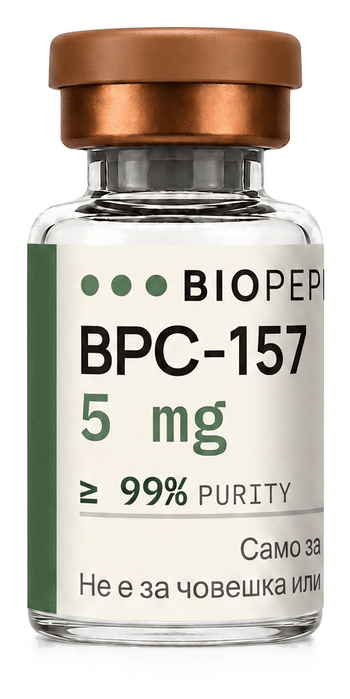
BPC-157 is a synthetic peptide studied in various preclinical models — cellular processes, tissue biology and interactions between biological systems. Some experimental studies show interesting results, but clinical data in humans is limited. It is therefore not correct to present BPC-157 as a proven treatment for injuries or disease.
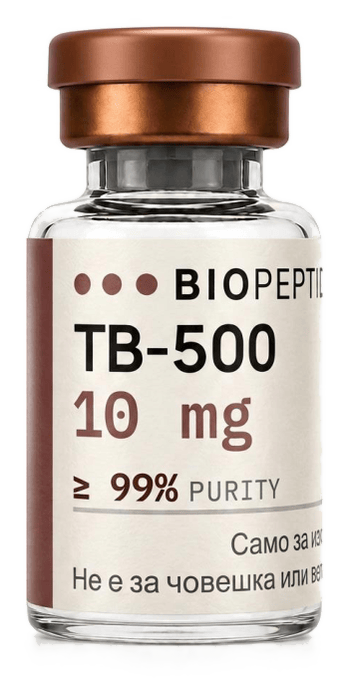
Thymosin beta-4 is a naturally occurring peptide involved in processes related to cell migration, the cytoskeleton and tissue biology. TB-500 is often described as a synthetic peptide related to thymosin beta-4. Research on thymosin beta-4 is of interest to tissue regeneration, but its results cannot be transferred automatically to every product labelled TB-500.
GHK-Cu is the copper complex of the tripeptide glycyl-L-histidyl-L-lysine. It occurs naturally in human plasma and has been studied in relation to skin biology, the extracellular matrix and cellular processes. It is widely used in cosmetic formulations, but the scientific context of cosmetic use must be separated from claims about treating or repairing deep tissue damage.
Thymosin alpha-1 is a synthetic peptide studied mainly in relation to the immune system and cell signalling. It is distinct from thymosin beta-4 and should not be presented as its analogue. Scientific interest in it concerns immunomodulation, not universal tissue “recovery”.
Recent reviews of peptides in sports medicine examine BPC-157, TB-500 and other molecules connected to tissue biology. The authors note that much of the available literature is preclinical, and that the human data is limited, heterogeneous and often does not support reliable conclusions about efficacy. Evaluating a peptide means looking at:
In the laboratory, a molecule may show a particular effect on cells or in an animal model. That does not demonstrate the same effect will appear in humans. The reasons include differences in metabolism, dosing, route of administration, tissue biology and immune response.
For laboratory peptides, what should be checked includes the exact structure, amino acid sequence, purity, molecular mass, analytical methods, batch number, storage conditions and the product's intended purpose. A COA provides information about a specific batch but does not demonstrate clinical efficacy or safety in humans.
BPC-157, TB-500, thymosin beta-4, GHK-Cu and thymosin alpha-1 are among the most discussed molecules in the recovery field, but they have different mechanisms and different levels of evidence. What matters most is separating preclinical results from demonstrated clinical effects, and presenting the information with the precision the science deserves.