GH-Axis Research
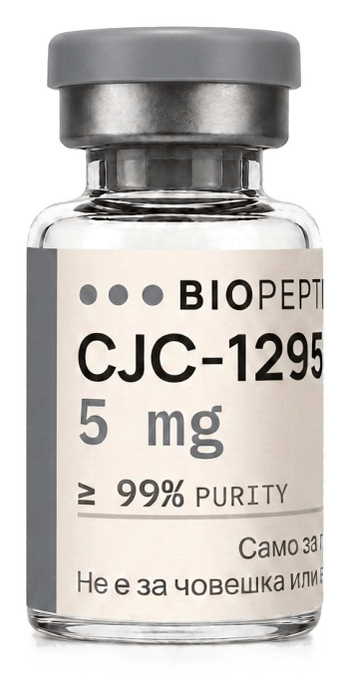
CJC-1295 No DAC
Short-acting GHRH analogue studied in pulsatile GH-release research.
≥99% (HPLC)Size: 5 mg
Free delivery on orders over €70
Published
Important: This article is intended solely for educational and informational purposes. It does not constitute medical advice and does not encourage the injection, ingestion or any use of peptides in humans or animals. The products on this site are intended for scientific research and laboratory purposes only.
CJC-1295 is a synthetic analogue of growth hormone-releasing hormone (GHRH), developed for studying the regulation of growth hormone (GH). Unlike direct administration of growth hormone, CJC-1295 acts higher up the regulatory system — through the GHRH receptor in the pituitary, stimulating endogenous GH secretion. Scientific interest stems not only from its ability to raise GH but from the development of a longer-acting form known as CJC-1295 DAC (Drug Affinity Complex). It is important to distinguish experimental forms of CJC-1295 from approved medical therapies — CJC-1295 is an experimental compound with no approved use.
CJC-1295 is a modified analogue of GHRH — the natural hormone produced in the hypothalamus that stimulates the somatotroph cells of the anterior pituitary to release growth hormone. The physiological system runs: hypothalamus → GHRH → pituitary → GH → IGF-1. CJC-1295 was designed to mimic part of GHRH's action and thereby increase endogenous GH secretion.
DAC stands for Drug Affinity Complex — a chemical modification designed to make the peptide bind albumin in the blood. Albumin is a large plasma protein with a long circulating life, and binding to it can greatly extend the time a molecule stays in circulation. The result is a much longer-acting GHRH analogue. In clinical pharmacology studies it is specifically CJC-1295 with DAC that demonstrated a prolonged effect on GH and IGF-1.
GHRH is released from the hypothalamus and reaches the pituitary through the hypophyseal portal system, where it binds the GHRH receptor (GHRHR) on somatotroph cells. That activates intracellular signalling pathways that increase GH synthesis and secretion. CJC-1295 uses the same basic axis: CJC-1295 → GHRH receptor → higher GH → higher IGF-1.
CJC-1295 DAC was studied in clinical pharmacology trials in healthy adults. One of the main studies enrolled 29 healthy participants across dose groups and placebo. After a single administration, GH concentration rose significantly and the effect persisted for several days. Notably, IGF-1 also rose and stayed above baseline for a prolonged period; after repeated administration, IGF-1 remained elevated for weeks. This is a key reason CJC-1295 DAC is regarded as a long-acting GHRH analogue.
In the clinical study, the estimated elimination half-life was roughly 5.8–8.1 days — far longer than natural GHRH. That prolonged exposure allows a single administration to produce a lasting change in the GH/IGF-1 axis. It should be stressed that this data belongs to the studied CJC-1295 DAC form.
IGF-1 mediates many of GH's peripheral effects — once GH is released, it stimulates IGF-1 production, especially in the liver. Studies of CJC-1295 therefore track both GH and IGF-1. With CJC-1295 DAC, a significant IGF-1 increase was found, outlasting the short physiological GH pulse. That is pharmacologically interesting, but by itself it does not demonstrate improved physical performance or body composition.
Normal GH secretion is pulsatile — concentrations vary through the day, with major peaks during sleep. Tellingly, a clinical study found that the pulsatile character of GH secretion persists even during continuous stimulation by CJC-1295. The peptide is not the same as administering GH directly: it stimulates the body's own pituitary through the GHRH receptor. Direct GH means external GH in circulation; CJC-1295 means a GHRH analogue → pituitary → the body's own GH. The distinction matters when interpreting results.
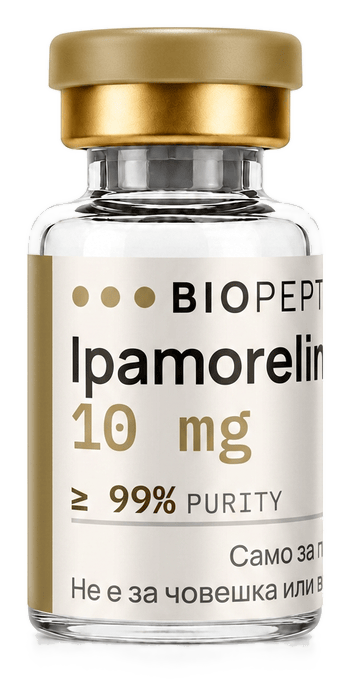
CJC-1295 and ipamorelin are often mentioned together but act through different receptor systems: CJC-1295 mimics GHRH and stimulates the GHRH receptor (CJC-1295 → GHRHR → GH), while ipamorelin activates GHS-R, the ghrelin receptor (ipamorelin → GHS-R → GH). In theory the two systems can stimulate GH via different physiological mechanisms — but that does not mean combining them automatically yields proven additional clinical benefit.
The market often uses the term “CJC-1295 no DAC” for short-acting GHRH analogue variants. Such products should not automatically be treated as pharmacologically identical to the studied CJC-1295 DAC. The best-documented human pharmacokinetic data concerns the DAC form, so results from its studies cannot be transferred unconditionally to every product labelled “CJC-1295”. Chemical structure, purity and form can all change pharmacokinetics and biological effect.
GH and IGF-1 take part in protein, lipid and bone metabolism and change with age, which is why the axis is studied. A rise in GH or IGF-1 is a pharmacodynamic marker; no clinical outcome has been established for CJC-1295.
Early clinical studies of CJC-1295 DAC observed adverse reactions including injection site reactions, headache, dizziness, nausea, diarrhoea and flushing. Some participants showed transient changes in heart rate and blood pressure. These findings must be read against the small size of the early trials. Most importantly, the long-term safety of sustained pharmacological GH/IGF-1 stimulation remains insufficiently studied.
IGF-1 is physiologically necessary for growth and development, but biological balance matters — persistently raised GH/IGF-1 activity can be associated with various metabolic and tissue effects. That is why, in studying GH secretagogues, it is not enough to measure whether a molecule raises GH; the whole chain must be considered: dose → exposure → GH → IGF-1 → physiological effect → safety.
CJC-1295 is a synthetic GHRH analogue that stimulates endogenous growth hormone secretion through the GHRH receptor. The best-studied form in early human research is CJC-1295 DAC, where albumin binding greatly extends the molecule's circulating life, and clinical pharmacology studies show prolonged elevation of GH and IGF-1. Those results must be interpreted correctly: raising GH and IGF-1 is a demonstrated pharmacological effect, but it is not equivalent to any demonstrated clinical outcome. Given the limited clinical data, CJC-1295 remains an experimental GHRH analogue of interest mainly for studying the regulation of the GH/IGF-1 axis.