GH-Axis Research
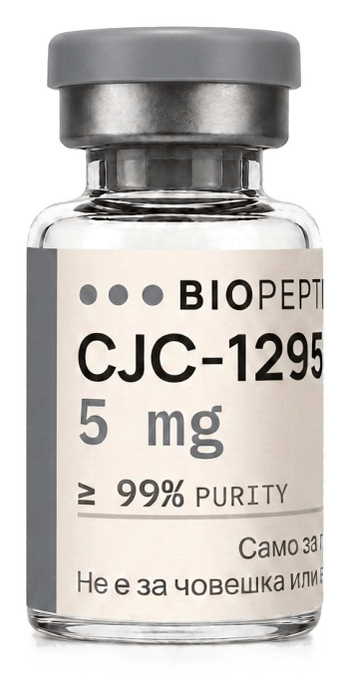
CJC-1295 No DAC
Short-acting GHRH analogue studied in pulsatile GH-release research.
≥99% (HPLC)Size: 5 mg
Free delivery on orders over €70
Published
Important: This article is intended solely for educational and informational purposes. It does not constitute medical advice and does not encourage the injection, ingestion or any use of peptides in humans or animals. The products on this site are intended for scientific research and laboratory purposes only.
Muscle-mass peptides are a popular topic among people interested in sports physiology, endocrinology and molecular biology. Some peptides are studied for their role in growth hormone regulation, muscle metabolism and cell signalling. Scientific interest in a molecule does not prove that it increases muscle mass in humans.
This is an informal name for peptides studied in relation to growth hormone, the IGF-1 signalling pathway, muscle physiology, protein metabolism, cell growth and tissue biology. These processes are complex and depend on many factors, including nutrition, training load, hormonal status and genetics.
CJC-1295 is a synthetic analogue of GHRH — the hormone involved in regulating the release of growth hormone. The molecule is studied for its interaction with receptor systems tied to hormonal signalling.
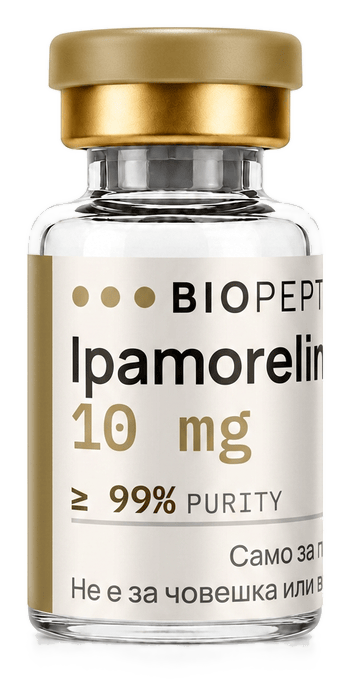
Ipamorelin is a synthetic peptide studied as a growth hormone secretagogue, of interest for its interaction with specific receptor systems. A change in hormonal markers is not the same as a demonstrated increase in muscle mass.
Sermorelin is a synthetic GHRH analogue used in scientific and medical contexts related to growth hormone. It is an example of a molecule where the specific product, its regulatory status and its intended purpose must each be considered separately.
MK-677, also known as ibutamoren, is studied for its influence on growth hormone secretion. Although it is often included in lists of “muscle-mass peptides”, MK-677 is not a peptide in the strict chemical sense but a small molecule acting as a secretagogue.
IGF-1 (insulin-like growth factor 1) is a peptide hormone involved in growth, development and a range of cellular processes. It is part of the GH/IGF-1 axis and of interest in muscle physiology research. Changes in its levels cannot be viewed in isolation from the rest of the endocrine system.
Scientific reviews of peptides in a sports context examine CJC-1295, ipamorelin and other molecules tied to hormonal signalling. The data shows that much of the research addresses physiological mechanisms and hormonal markers, while the evidence for meaningful, lasting effects on muscle mass in humans is limited. It is therefore important to distinguish:
Some growth-hormone-related peptides fall under anti-doping restrictions. Athletes should check the current WADA rules and those of their sports federation.
For laboratory peptides, what should be checked includes the exact molecular structure, amino acid sequence, molecular mass, purity, analytical documentation, intended purpose and storage conditions. A COA can confirm characteristics of a specific batch, but it does not demonstrate that a product increases muscle mass or is safe for human use.
CJC-1295, ipamorelin, sermorelin and IGF-1 are among the most discussed molecules in this area, while MK-677 is an example of a compound often placed in the category despite not being a peptide. Scientific mechanisms and changes in hormonal markers must not be presented as proof of increased muscle mass in humans.