Metabolic Pathway Research
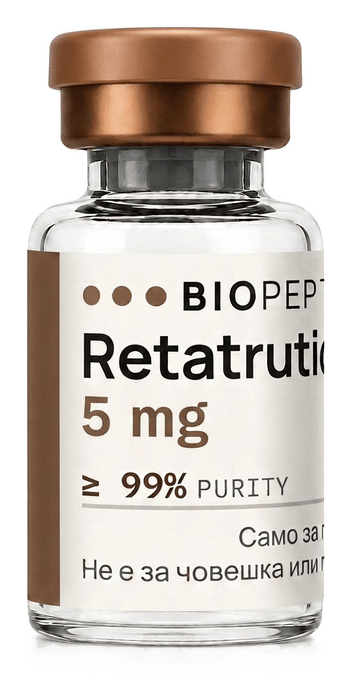
Retatrutide
Triple hormone receptor agonist for metabolic research.
≥99% (HPLC)Size: 5 mg · 10 mg · 30 mg
Free delivery on orders over €70
Published
Important: This article is intended solely for educational and informational purposes. It does not constitute medical advice and does not encourage the injection, ingestion or any use of peptides in humans or animals. The products on this site are intended for scientific research and laboratory purposes only.
Retatrutide (LY3437943) is an experimental peptide agonist in development by Eli Lilly, studied for its activity at three metabolic hormone receptors. Unlike compounds that activate one or two hormonal receptors, retatrutide simultaneously activates the GLP-1, GIP and glucagon receptors — a combination that places it among the most interesting molecules in metabolic receptor research. Important: retatrutide is still an investigational molecule and is not approved by any regulatory agency. The data in this article comes from scientific publications and clinical trials and is not medical advice.
Retatrutide is a single-molecule triple receptor agonist active at the GLP-1 receptor (GLP-1R), the GIP receptor (GIPR) and the glucagon receptor (GCGR). The simultaneous engagement of all three receptor systems is what sets it apart from earlier generations of incretin therapies. GLP-1 and GIP are hormones tied to glucose regulation and energy balance, while glucagon plays an important role in mobilising energy substrates. The concept: combining these three signals in one molecule may produce a broader metabolic effect.
The first major human data came from a 48-week, placebo-controlled Phase 2 trial in 338 adults, published in NEJM in 2023, which reported dose-dependent changes in body weight and metabolic markers. Full results are in the cited publication.
A Phase 2 trial in 281 people with type 2 diabetes reported dose-dependent changes in HbA1c and body weight.
In 2026 Lilly reported topline results from several Phase 3 trials in the TRIUMPH programme, in populations with obesity, type 2 diabetes and knee osteoarthritis. These are company announcements; full peer-reviewed publications are pending.
As with other incretin-system therapies, the most commonly reported adverse reactions are gastrointestinal: nausea, diarrhoea, vomiting, constipation — mostly mild to moderate and more frequent in higher-dose trial arms. A dose-dependent increase in heart rate was also observed, peaking around week 24 and declining thereafter. Efficacy results should never be read apart from the safety profile.
As of September 2026, Lilly states that retatrutide is not approved by the FDA or any other regulatory agency and is being studied in a Phase 3 programme.
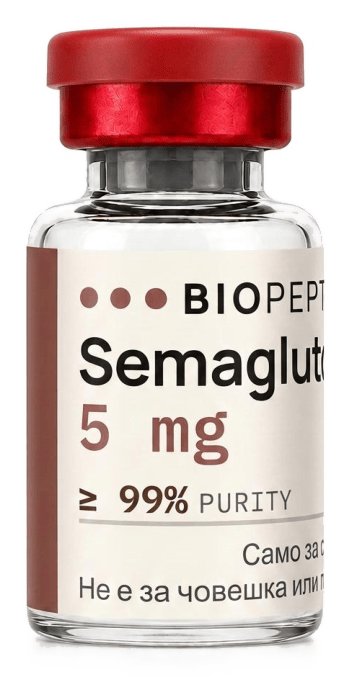
The evolution can be sketched as: GLP-1 → GLP-1 + GIP → GLP-1 + GIP + glucagon. Semaglutide is a GLP-1 receptor agonist; tirzepatide activates GLP-1 and GIP; retatrutide adds the glucagon receptor. That does not automatically make one molecule “better” in every situation — each combination has its own pharmacology, efficacy and safety profile, and head-to-head trials will determine retatrutide's exact place among modern metabolic therapies.
Retatrutide is one of the most interesting examples of the next generation of peptide metabolic therapies — simultaneous activation of the GLP-1, GIP and glucagon receptors, combining incretin effects with glucagon's metabolic actions. Phase 2 data and 2026 Phase 3 topline results exist for defined clinical populations. Research-grade material is a laboratory reagent and is not the investigational medicine used in those trials.